Planning for clean alleys at Hamra Farm
How clean alleys support cow comfort, efficiency, and sustainability at Hamra Farm
Clean alleys might not be the first thing you think about when planning a barn, but their impact quickly becomes clear in everyday work. Alley cleaning plays a key role in cow comfort and hoof health, while also influencing daily workload and how smoothly cows move through the barn. Slippery floors, dirty legs or blocked systems quickly highlight where routines or barn design fall short.
During the Hamra Farm Expansion Project, we focused on manure handling and robotic collectors when designing the new barns, to ensure alleys stayed clean. Well‑planned manure handling and robotic collectors were fully integrated into the barn design, supporting clean, dry walking surfaces that promote cow comfort and hoof health, while ensuring reliable daily operation and efficient barn management. By bringing together automated solutions, robust engineering and a closed manure loop, the approach shows how deliberate planning supports both cow comfort and overall farm performance.
Below, we break down how those choices were made – what was prioritised, and why it matters in daily barn operation.
Alley cleaning in the VMS Barn
In the video, William Eriksson, Market Area Development, Eastern Europe, DeLaval, shows us around the VMS Barn at Hamra Farm and explains how alley cleaning is planned and managed to keep walking surfaces clean, dry and safe for cows.
Why clean alleys matter for cow health, behaviour, and productivity
For dairy cows, the condition of the walking surface plays a central role in health, behaviour, and productivity
Risk of injury
Wet or contaminated floors increase the risk of slipping and place additional strain on claws and joints, raising the risk of lameness and claw horn lesions over time. Cows may hesitate, shorten their stride, or avoid certain areas altogether, disrupting cow flow.
Behaviour changes
When walking becomes uncomfortable, cows may stand longer, delay visits to feed or water, or be less willing to walk to the milking robots. In automated barns, this can reduce voluntary robot visits and increase the need for fetching and intervention.
Hoof and udder hygiene
Clean alleys reduce prolonged contact between claws and manure, supporting hoof hygiene and lowering infection pressure. Cleaner walking areas also improve udder and teat cleanliness — particularly important in VMS barns.
Productivity
Clean, dry alleys support smooth movement between lying areas, feed, water, and milking robots. This helps cows maintain regular feeding and milking patterns, supports consistent milk production, and reduces manual intervention in automated barns.
Clean alleys with manure robots in the VMS Barn at Hamra Farm
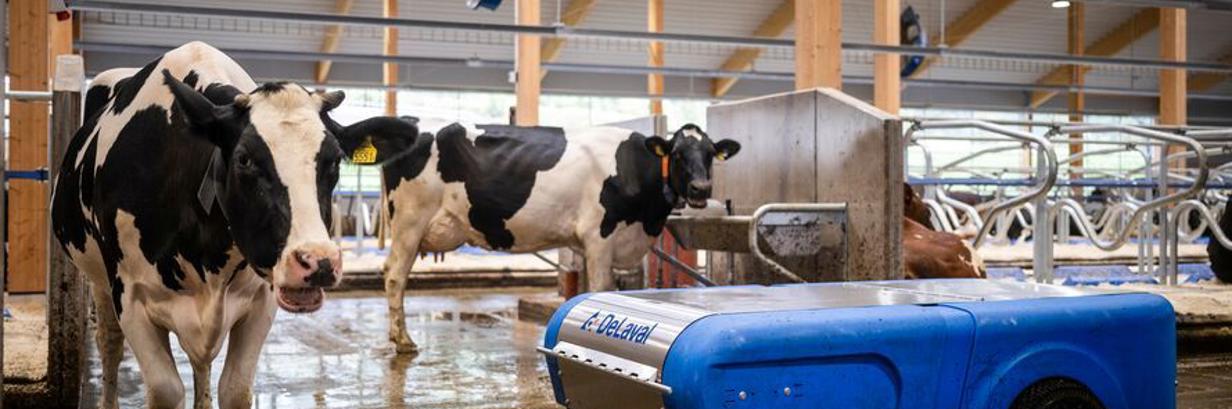
In the VMS Barn at Hamra Farm, manure is handled using DeLaval robot collectors, chosen specifically to meet the demands of automated milking. Instead of pushing manure along the alleys, the robots collect it directly from the walking surface and transport it away. This reduces contact between manure and hooves compared with conventional scraping systems.
We operate four DeLaval robot scrapers in the VMS Barn – three in the main cow area and one in the VIP area. Each robot is assigned to a specific area of the barn and follows its own predefined cleaning route, supporting predictable operation and reliable manure removal across the different zones. Our manure handling system is designed to operate reliably at full barn capacity (350 cows), ensuring performance remains stable as cow numbers increase over time.
This type of manure‑handling set‑up is particularly important in barns with automated milking systems, as alley conditions have a direct impact on cow flow. Cows need to feel confident walking to and from the milking robots throughout the day and night. Slippery or heavily soiled walking surfaces can reduce voluntary robot visits and increase the need for fetching and manual intervention, affecting both labour efficiency and overall system performance. Consistent alley hygiene helps maintain smooth cow traffic and supports the milking system operating as intended.
Parking and charging stations
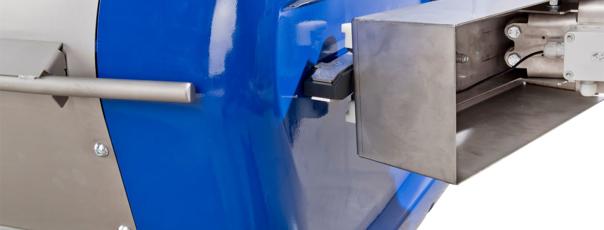
Each robot has its own parking and charging station.
During charging, the robots automatically empty the collected manure into a drainage pipe that leads to the VMS Barn reception pit, which receives manure exclusively from the VMS Barn.
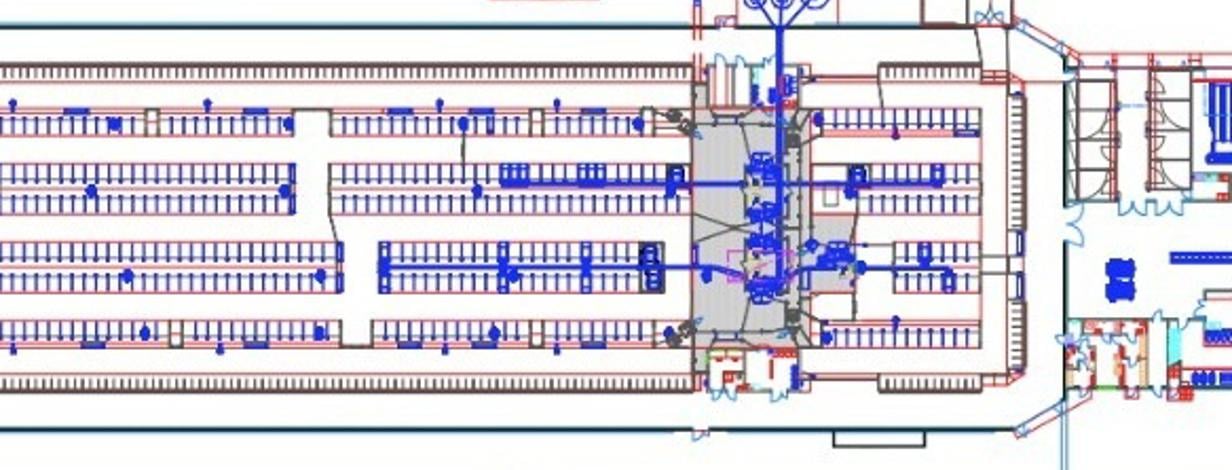
The other barns – the Heifer Barn (young stock) and the dry cow/maternity barn – each have their own separate reception pits. In total, the farm has three reception pits, one for each barn. All reception pits are equipped with manure pumps that pump the manure to the lagoon.
Reception pits
During charging, the robots automatically empty the collected manure into a drainage pipe that leads to the VMS Barn reception pit, which receives manure exclusively from the VMS Barn.
In total, the farm has three reception pits. The Heifer Barn (young stock) has its own reception pit, while Elly’s Dry Cow Barn and the Maternity and Calf Barn share one reception pit. All reception pits are equipped with manure pumps that transfer the manure to the lagoon.
Designed for frequent, consistent cleaning
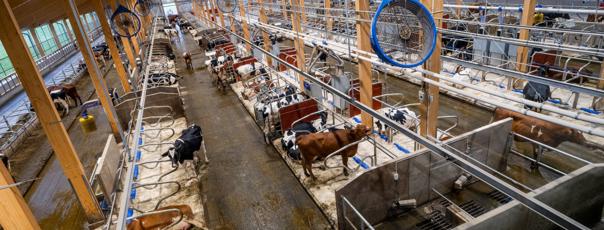
Our setup allows alleys to be cleaned continuously throughout the day, including high‑traffic areas such as crossings.
In the VMS Barn, manure handling is designed to remove manure frequently across different barn zones – typically every two hours – rather than allowing it to build up before removal. This helps prevent manure from drying, compacting, or spreading further through the barn, particularly in areas where cows move and gather most.
In practice, we find that this approach supports:
- Cleaner, drier walking surfaces, which help cows move more confidently and comfortably throughout the barn.
- Improved hoof and leg cleanliness, reducing prolonged contact with manure and supporting long‑term hoof health.
- Smoother cow flow, especially around robot entrances and other high‑traffic areas, with fewer hesitant or reluctant cows.
- More consistent feeding and milking routines, as cows are more willing to move between lying areas, feed, water, and the milking robots.
- Reduced need for fetching and manual intervention, improving day‑to‑day labour efficiency in an automated barn.
- Easier observation of movement and gait, making it simpler to spot early signs of discomfort or mobility issues.
- More stable conditions across seasons, even when manure volumes and moisture levels vary.
The result is cleaner alleys, calmer cow movement, and a barn environment that supports animal comfort, productivity, and efficient daily management.