Feeding cows at Hamra Farm: what we’ve learnt
Fresh feed. Every cow. Every day.
Keeping fresh feed in front of the cows throughout the day sounds simple, but as you know, it’s not always that easy.
What goes into the ration? How well is it mixed? How often is fresh feed delivered? Does every cow get a fair chance to eat? And how do you keep the feeding area clean and comfortable?
There’s a lot to think about. So when we developed our feeding routine, we focused on what matters to us: feeding the cows well, keeping things consistent and comfortable for them, and making good use of our feed and our time.
At the end of the day, you want the cows well fed and comfortable, without wasting feed or making more work than necessary.
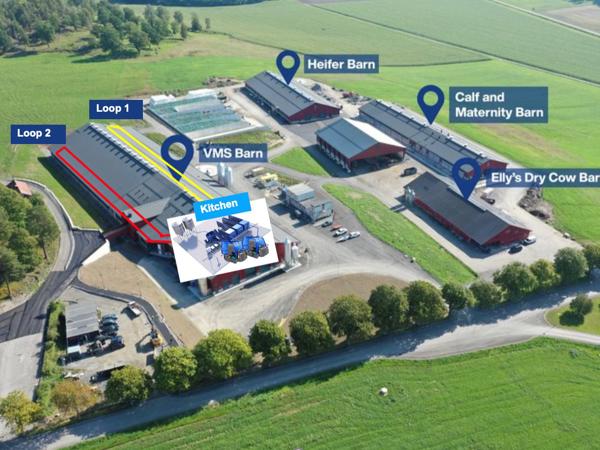
So, what does feeding look like in our VMS Barn? Let’s show you. First stop: the Feed Kitchen.
Our feeding figures
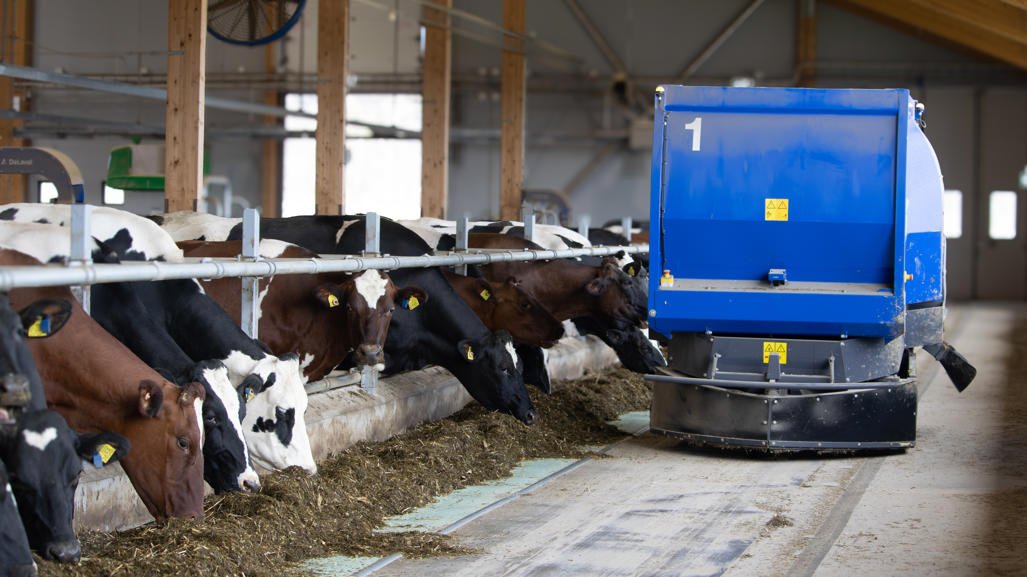
Our automated feeding system uses DeLaval OptiWagon™, an automated feed distribution wagon that transports and distributes prepared feed to the different cow groups throughout the day. • 338 cows are fed each day • Around 15 tonnes of feed are prepared every day • The OptiWagons make 15–17 feeding runs per day • Each cow group receives 5–7 feeding sessions per day • Each OptiWagon can carry up to 800 kg of feed • Each feeding run takes around 10–12 minutes
1. Getting feed from the kitchen to the cows
The Feed Kitchen, located within the VMS Barn, is where we store, mix and prepare the feed before it heads out to the cows. And when you’re preparing around 15 tonnes every day, it’s a busy place.
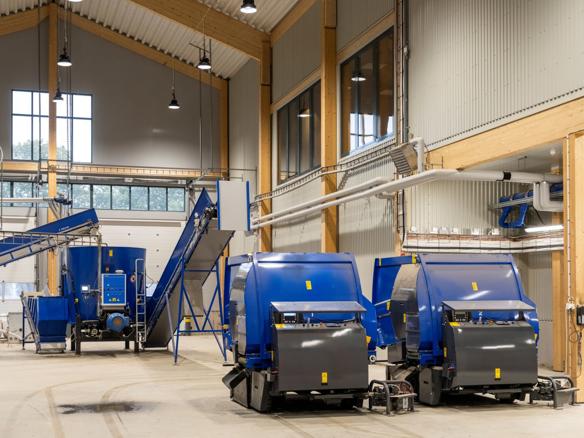
Our feed kitchen includes:
• four DeLaval buffer tables
• a DeLaval Vertical Stationary Mixer
• DeLaval feeding conveyors
• two DeLaval OptiWagons
Together, they form one continuous process: A. prepare the rations → B. mix → C. move the prepared feed → D. deliver it to the cows.
A. Prepare the ration
Our four feed buffer tables hold the roughage used in the ration, such as grass and maize silage. Other feed ingredients are kept separately, so we can combine them in different amounts depending on what each group of cows needs.
The exact mix varies depending on the group, but a typical ration for us is around 60–70% grass silage and 30–40% maize silage, together with approximately 0.1 kg each of salt, minerals and lime per cow per day. On average, each cow receives around 12–13 kg of dry matter from the mixed ration per day, equivalent to roughly 30–35 kg of silage-based feed. The cows are fed ad libitum, which simply means they always have access to feed and can eat as much as they want.
The cows also receive individually allocated concentrates, pellets, and grain at the feeding stations and while they are being milked in the VMS. Each cow’s ration is measured individually and adjusted once a month.
B. Mix
Inside the mixer, vertical augers cut, lift, and mix the ingredients, bringing everything together into a consistent ration.
This is important because we want the feed to be mixed evenly, so cows aren’t getting more of one ingredient and less of another. A good mix also means the cows are less able to pick through the feed for the bits they prefer and leave the rest behind.
Making the most of our feed
There is very little left over. We clear away any remaining feed once a day or every second day. Roughage leftovers are spread back onto our fields. When it comes to concentrates, pellets, and grain, each cow’s ration is measured individually and adjusted once a month. This feed is delivered individually through the feeding stations and milking stations, and there are no leftovers. For us, it’s about making sure each cow gets what she needs while keeping waste to a minimum.
C. Move the feed
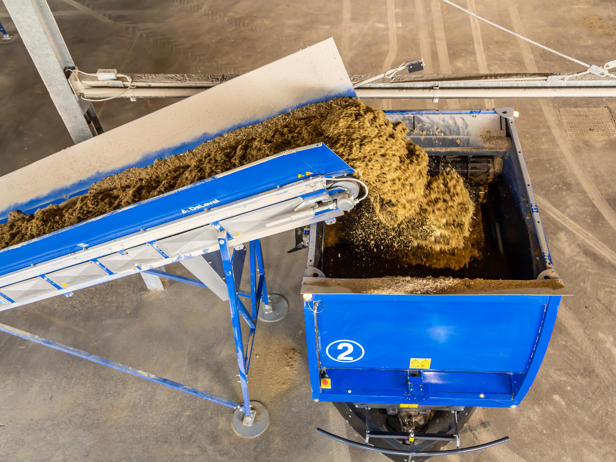
Once the ration is ready, the feeding conveyor takes it from the mixer to the loading point. That’s when the next part of the system kicks in.
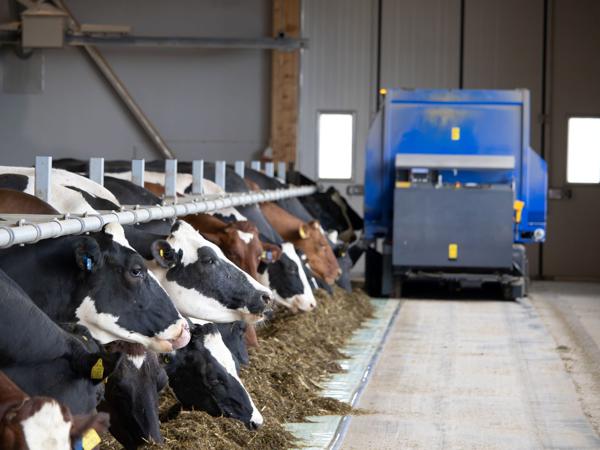
An empty OptiWagon is automatically called to the loading point, moves underneath the conveyor, and is loaded with the prepared ration.
Once loaded, the OptiWagon sets off on its programmed route through the barn, delivering fresh feed to the assigned cow group.
Press play to watch the OptiWagon in action.
D. Deliver
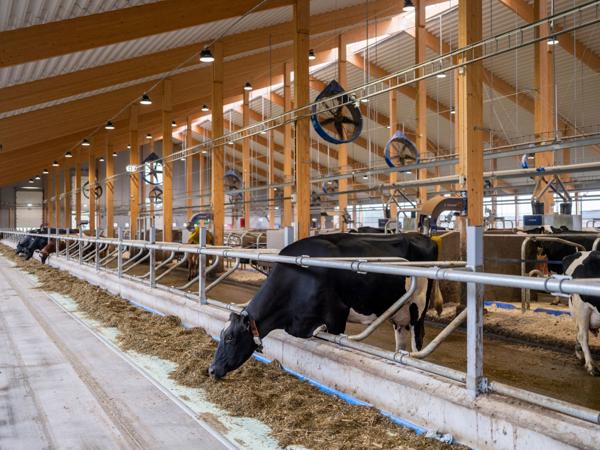
As it travels along the feed table, it distributes fresh feed while pushing the remaining feed back towards the cows, helping keep it within reach and away from the walkway, where it can become soiled. This also helps reduce feed waste.
At the same time, keeping fresh feed available isn’t about simply adding more and more. We keep an eye on what is left at the feed table and adjust the amount we deliver according to how much the cows are eating.
Once a feeding run is complete, the OptiWagon returns to its charging position and waits until it’s needed again.
Can OptiWagon be added to an existing barn?
Yes, OptiWagon can also be an option for some retrofit projects as well as new barns. It follows an induction line cut into the concrete floor, with induction cables guiding it along its defined route through the barn. The induction line can also be cut into an existing concrete floor, making the system suitable for some existing barns.
2. Feeding as part of cow traffic
Our VMS Barn operates with voluntary milking, meaning cows aren’t brought for milking at fixed times. A good daily routine therefore helps keep them naturally moving between eating, resting, and milking throughout the day.
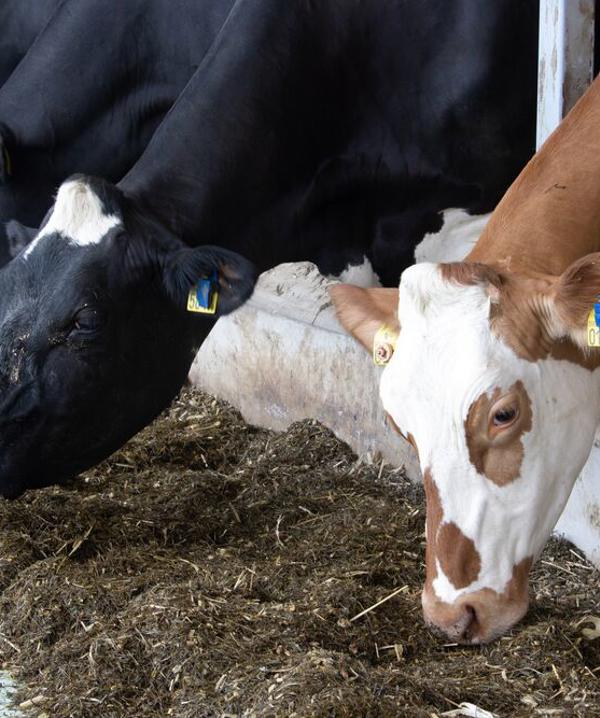
Frequent feed delivery plays an important role in that routine. When the OptiWagon enters the barn with fresh feed, the cows recognise its arrival, get up, and move towards the feed table.
Our VMS Barn also operates with guided cow traffic and a feed-first principle. Guided cow traffic means we use smart gates to help direct cows through the barn depending on where they need to go. Feed-first means cows go to the feed table before passing through these gates, where cows that are due for milking can be directed towards the VMS.
Feed can provide another incentive for cows to visit the VMS: they receive individually allocated feed in the milking robot while they are being milked.
So, feeding and milking aren’t separate parts of the cows’ day. Fresh feed helps encourage cows to get up and move towards the feed table, while the smart gates help guide cows that are due for milking towards the VMS. Delivering fresh feed throughout the day and night helps us keep that routine going.
The individual feeding stations (DeLaval feed station FSC40) are also part of this cow traffic. The cows can visit these stations to receive their individually allocated concentrate feed, giving them another reason to move around the barn as part of their daily routine.
All our feeding-related systems work together to support a predictable daily routine, so our cows know what to expect throughout the day, while supporting cow comfort and efficient VMS operation. This, in turn, can help support milk production.
It seems to be working well for us. Hamra Farm has had cows among Sweden’s top milk producers, with good feeding routines playing their part alongside everything else we do on the farm.
3. Saving time on routine feeding
Being DeLaval’s own commercial dairy farm doesn’t make us immune to the labour challenges facing dairy farms. Finding labour isn’t getting any easier, and as Hamra Farm has grown, there’s simply more to do.
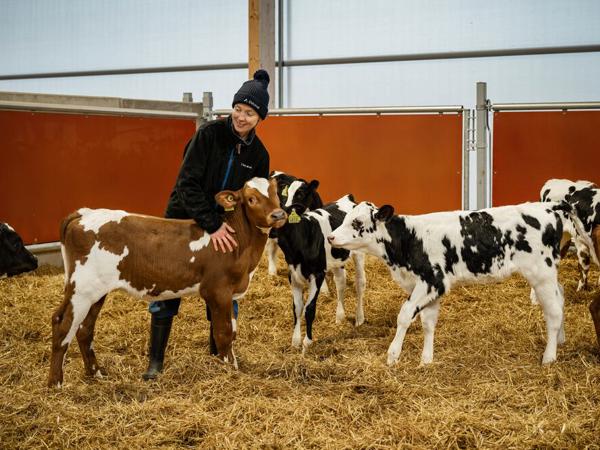
For us, automation isn’t about replacing people. We have a great team here at Hamra Farm, and they’re a huge part of what makes the farm work. Automation takes care of some of the repetitive tasks, giving us more time to focus on the cows and the other work that needs our attention.
Planning the feeding system at Hamra Farm
Watch Gökhan Kaplan, Feeding Specialist at DeLaval, explain the thinking behind the feeding system design and the key considerations that shaped the final solution.
4. Cow-friendly feeding areas
A good feeding area is about much more than putting feed in front of the cows. The way the feed table, feeding places and barn robots are coordinated can influence how calmly cows eat, how easily they access feed, and how clean the feeding environment remains.
We've combined several practical design choices to create a feeding environment where cows can eat with as little disturbance as possible.
A. Every cow has a comfortable place to eat
One important feature we use is individual feed stands. At the feed table, each cow steps onto a raised platform and has her own defined place to eat, with dividers separating her from the cows on either side.
Having her own space helps prevent other cows from disturbing her while she eats and reduces competition around the feed. This creates a calmer feeding environment, particularly for lower-ranking cows.
The individual feed stands allow lower-ranking cows to stand and eat alongside higher-ranking cows without being pushed away or disturbed. With just a neck rail, this can be more difficult.
For us, a well-designed feed table should not only provide access to feed, it should also give cows the opportunity to eat calmly.
B. Manure robots are kept away from cows while they eat
The raised feeding platform provides another advantage: the manure robot does not need to travel directly underneath a cow while she is standing and eating. This reduces one potential source of disturbance at the feed table, helping cows eat calmly and undisturbed in a clean environment.
But we take the planning a step further. When fresh feed is distributed, cows naturally tend to approach the feed table. We use this behaviour to help coordinate the work of the barn’s robots. While the cows are drawn towards the feed table by fresh feed, the manure robots can be directed towards the back alley, allowing cleaning to take place away from the cows while they eat.
Fresh feed is delivered → cows move towards the feed table → manure cleaning takes place in the back alley
Rather than having different automated systems operating independently, their activities can complement each other, making cleaning easier while helping to minimise disturbance for the cows.
C. Hygiene is a part of the feeding-area design
Cow comfort is only one consideration. A feed table also needs to be easy to keep clean.
On our feed table, we use a special food-grade covering, DeLaval Feeding Table Cover FTC, rather than relying only on exposed concrete. Over time, concrete can become worn and porous, making the surface more difficult to keep clean. The smooth, food-grade surface of the Feeding Table Cover FTC is easy to clean and is designed to help inhibit bacterial growth and feed contamination.
Key takeaways
Feeding is about much more than simply getting feed in front of the cows. Here are some of the things we’ve learnt about keeping feeding consistent, supporting cow traffic and comfort, and making the different parts of the barn work together.
-
Frequent feeding helps us maintain a consistent routine
Each cow group receives fresh feed 5–7 times a day, helping us keep fresh feed available and maintain the predictable routine we want in our VMS Barn.
-
Consistency comes from the whole feeding process
It’s not only about how often we deliver feed. Preparing the ration, mixing it well, moving it to the OptiWagon, and delivering it to the right cow group all play a part.
-
Feed delivery can also help keep cows moving
In our VMS Barn, fresh feed encourages cows to get up and approach the feed table. With our feed-first cow traffic, smart gates can then guide cows that are due for milking towards the VMS.
-
Automation gives our team more time for other work
Automated feeding takes care of repetitive feed delivery throughout the day and night, giving our team more time for the cows and other work around the farm. For us, it’s about making better use of people’s time, not replacing them.
-
Every cow needs a fair chance to eat
Our individual feeding places give each cow her own space, allowing lower-ranking cows to eat alongside higher-ranking cows without being pushed away or disturbed.
-
Feeding needs to work with the rest of the barn
We don’t look at feeding in isolation. The feed table, individual feeding places, OptiWagon, cow traffic, and manure robots all need to work together to support the way we want the barn to operate.